What Makes a Business Video Actually Convert (Not Just Get Views)
Plenty of business videos rack up views and go nowhere. Here's the real anatomy of a video that converts — the hook, the clarity, the proof, the CTA — and the quiet mistakes that sink otherwise good production.
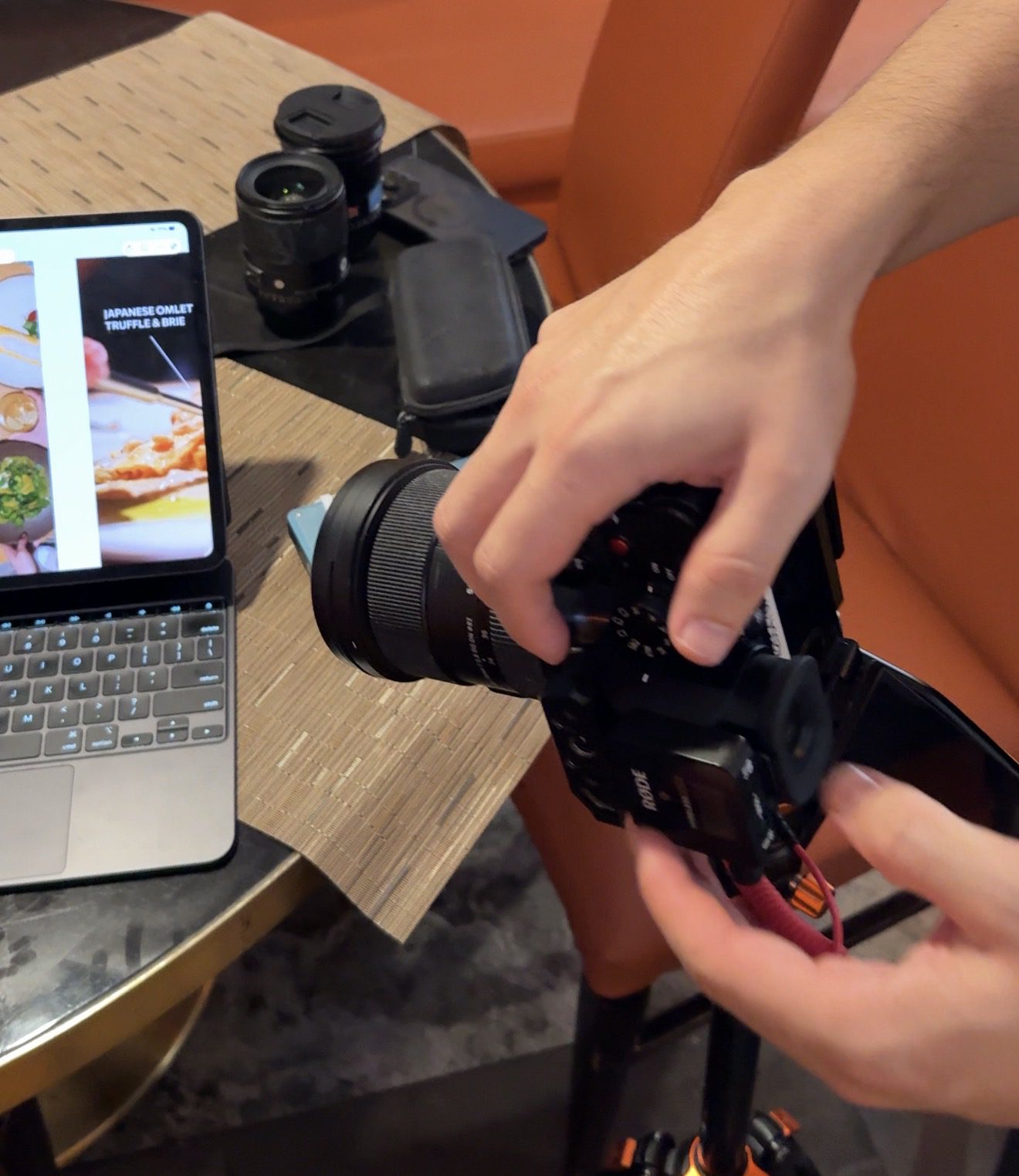
What Makes a Business Video Convert?
A business can spend thousands of dollars on a beautifully shot video, rack up tens of thousands of views, and end the quarter with nothing to show for it. Meanwhile, a scrappier, less polished video from a competitor quietly outperforms it on every metric that actually matters.
Views were never the goal. Conversion was. And the gap between a video that performs and a video that converts comes down to a handful of decisions most businesses never think to make deliberately.
The Hook: You Have About Two Seconds, Not Ten
Every platform where video lives now operates on the same brutal rule: if the first two seconds don't earn attention, nothing after them gets seen. Not the beautiful cinematography. Not the carefully written script. None of it.
A hook isn't a slow build — it's an immediate reason to keep watching. That might be a bold claim, an unexpected visual, a question the viewer didn't know they wanted answered, or a problem stated so precisely the viewer recognizes themselves in it instantly.
The Mistake Most Videos Make Here
Most business videos open with a logo, a slow establishing shot, or a warm introduction — exactly the content a scroll-happy viewer has zero patience for. Save the polish for the middle. Earn the right to be watched first.
Clarity: Say the One Thing, Not Six Things
A video trying to communicate everything a business does usually ends up communicating nothing memorably. Conversion-focused video picks one message and commits to it completely — one product, one benefit, one specific outcome for one specific type of viewer.
That discipline feels like a sacrifice in the planning stage. It rarely feels like one once the results come in, because a single clear message is dramatically easier for a viewer to remember, repeat, and act on than a comprehensive overview crammed into ninety seconds.
Proof: Give the Viewer a Reason to Believe You
Claims are cheap. Every business says its product is great, its service is reliable, its results are real. A video that converts backs the claim with something concrete:
A real customer describing a real outcome, in their own words
Before-and-after evidence that speaks for itself without narration
A specific number instead of a vague superlative — "347 businesses served" lands harder than "trusted by many"
Visual demonstration of the product or service actually working, not just being described
Proof is what separates a video someone half-believes from one that actually moves them to act.
The CTA: Tell the Viewer Exactly What to Do Next
A surprising number of otherwise strong videos end without ever explicitly asking for anything. The viewer is engaged, persuaded, ready — and then the video just ends, leaving them to figure out the next step on their own.
A converting video is explicit:
State exactly what action to take — visit a link, call a number, fill out a form
Make that action feel low-risk and immediate, not vague and distant
Repeat the CTA if the video runs longer than thirty seconds, since attention drifts and viewers forget
Match the CTA's tone to where the viewer actually is in their decision — a first-touch video shouldn't demand a purchase; it should invite a next step
Landing Page Alignment: The Conversion Killer Nobody Talks About
Here's where a lot of genuinely well-made videos quietly fail: the video makes a promise, and the page it links to doesn't deliver on it.
If a video promises a specific offer, a specific price, or a specific outcome, and the landing page it sends traffic to talks about something slightly different — a broader service, a vaguer benefit, a missing detail — the viewer feels a small, disorienting mismatch. That mismatch is often the actual reason a "great video" produced disappointing conversion numbers, and it has nothing to do with the video's quality.
The video and the destination need to tell the same story, in the same language, making the same promise.
Distribution: A Great Video in the Wrong Place Converts Nothing
The most conversion-optimized video ever made will underperform if it's placed where its intended audience never sees it, or edited in a format the platform doesn't favor.
Distribution decisions that actually matter:
Aspect ratio and length matched to the specific platform, not a single cut repurposed everywhere
Captions built in, since most video is watched with sound off
Placement aligned with where the target audience actually spends time, not where posting is easiest
Paid amplification behind organic content that's already proving itself, rather than starting cold
Where This Comes Together: HYPE IN NYC's Approach to Video
This is the exact framework HYPE IN NYC applies to every video project — treating the hook, the message, the proof, and the CTA as inseparable from the landing page and distribution strategy around them, rather than handling production in isolation. A beautifully shot video with no conversion strategy behind it is still just a beautifully shot video. HYPE IN NYC builds the whole system, so the video isn't the finish line — it's one deliberate step in an actual conversion path.
The Real Takeaway
A video doesn't convert because it looks expensive. It converts because every decision inside it — the hook, the message, the proof, the ask, the destination — was made with the viewer's next action in mind, not just their attention.
Want a video strategy built around actual conversion, not just view counts? Get in touch and we'll map out exactly what that would look like for your business.